
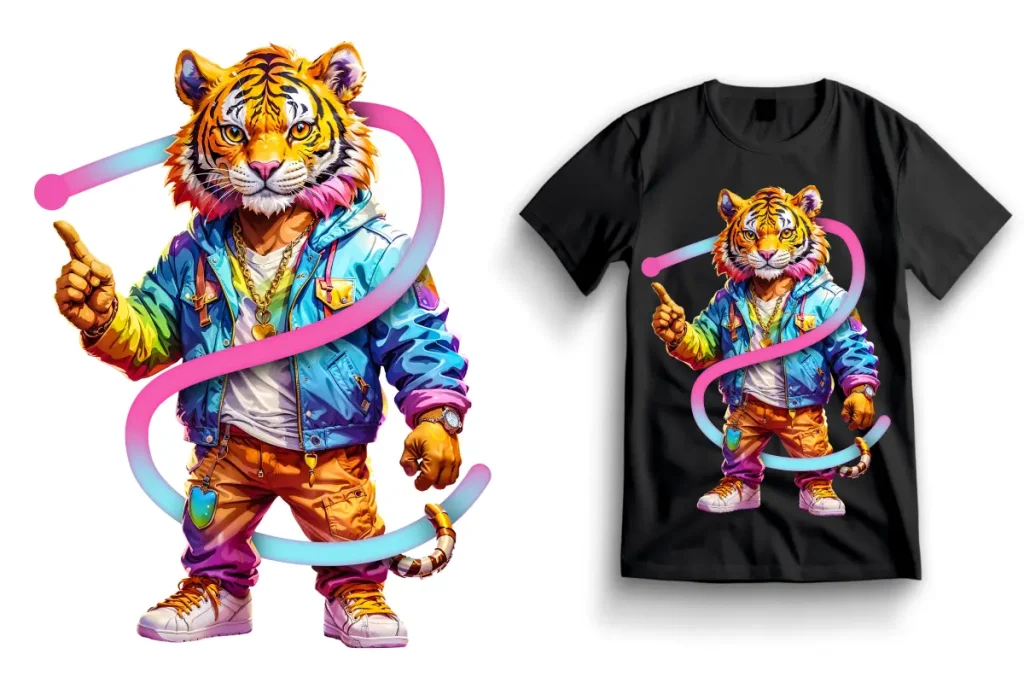
Navigating the complex ecosystem of modern garment decoration requires balancing creative freedom with raw production efficiency. For a long time, entering the custom apparel space meant choosing between high-maintenance setups or strict fabric limitations that choked business growth. The grand emergence of dtf transfers solved these operational pain points overnight, providing print-on-demand flexibility alongside vibrant, industrial-grade durability. Whether you are launching an independent streetwear collection or fulfilling high-volume corporate uniform orders, this specific digital printing technique bridges the gap between complex graphic concepts and flawless physical execution on almost any textile texture.
The contemporary marketplace heavily rewards agility and tactile quality. Modern buyers expect crisp details that survive intensive daily washing cycles without turning into a stiff, plastic shield on their chest. To scale an apparel operation successfully in today’s landscape, you must look beyond basic heat press mechanics and master the structural elements of film printing. Understanding how premium film adhesive behaves under heat, minimizing supply chain lag by finding production partners nearby, and perfecting your workspace application steps will fundamentally convert your custom apparel pipeline from a stressful chore into a highly profitable, streamlined system.
The Technical Blueprint Behind Advanced DTF Applications
Understanding why this method continuously outperforms older decoration types requires looking closely at what DTF stands for and how the physical chemistry works during production. Direct-to-Film printing utilizes commercial-grade inkjet systems equipped with specialized water-based pigment inks. The system accurately prints a full-color CMYK layer onto a clear, dimensionally stable release film, immediately overlapping it with a highly opaque layer of pure white ink to serve as a universal backing.
While the printed ink layer is entirely wet, an automated shaker dusts the film with a fine, granular hot-melt polyurethane adhesive powder. The film then travels down a precision-controlled infrared drying tunnel, melting the powder into a uniform, rubberized bonding matrix. When this stabilized film is later compressed onto a garment using a commercial heat press, the polyurethane adhesive completely liquefies, wrapping around the individual fabric fibers to create a permanent, flexible seal that moves naturally with the textile instead of sitting rigidly on top of it.
Why Digital Film Transfers Dominate Traditional Printing Methods
Every print shop owner or clothing brand curator prioritizes structural versatility, wash performance, and cost control when evaluating decoration methods. Advanced digital heat transfers excel across all three factors, presenting clear competitive advantages that legacy methods cannot replicate.
- Unconstrained Material Adaptability: Sublimation printing requires pure white polyester to bind chemically, and direct-to-garment systems require deep, specialized liquid pretreatments that stain delicate fabrics. Modern digital heat films break these boundaries entirely. They bond perfectly to rough canvas tote bags, heavy cotton hoodies, delicate nylon activewear, smooth rayon blends, and dense polyester jackets with uniform consistency.
- Sensational Elasticity and Recovery: Inferior heat transfer applications typically suffer from micro-cracking when stretched or pulled during normal wear. Premium film configurations utilize highly elastic polymers that expand and snap back into place effortlessly. This ensures your custom garments can easily withstand more than fifty heavy-duty machine wash and dry cycles without showing visible edge lifting, fading, or color bleeding.
- Massive Reduction in Dead Stock Risk: Screen printing demands hours of intensive setup, physical screen burning, and messy ink cleanups, making small production runs financially impossible. Transitioning to a digital film model allows you to organize multiple graphics onto a tight gang sheet, store the unpressed transfers safely in a compact drawer, and apply them to blank apparel only when an actual sale occurs.
The Strategic Edge of Sourcing Print Media Locally
In the fast-moving fashion and corporate merchandising spaces, delivery speed dictates your ultimate brand reputation. While purchasing custom print films from distant national or overseas suppliers might look slightly cheaper on initial invoices, the hidden burdens of extended transit timelines, customs logjams, and lack of human communication often ruin your production schedules. This operational bottleneck is the exact reason why experienced apparel decorators continuously search for verified dtf transfers near me to protect their production timelines.
Building a strong alliance with a regional manufacturing hub entirely resets how you handle sudden client demands. If a local sports league or corporate office places a rush order for a weekend tournament, waiting five days for standard cargo transit is simply not an option. Local sourcing allows you to upload vector artwork files, have the custom film sheets printed to commercial standards, and arrange same-day pickup or rapid local delivery. This local proximity also lets you review real physical samples to guarantee accurate color representation before running an expansive project.
Locating the Absolute Best DTF Transfer at Houston
For custom printing businesses scaling within the expansive Texas economy, standing out demands an absolute commitment to material excellence. If your primary operational objective is to secure the best dtf transfer at Houston, you must evaluate the exact quality of raw components used during production. Substandard transfer sheets often use cheap, coarse adhesive powders or unstable inks that experience plasticizer oil migration, creating a greasy film surface that alters colors and degrades the fabric bond.
True retail-grade quality requires industrial print heads that control ink droplet volume with extreme precision, combined with static-resistant release films that prevent powder from scattering onto non-printed zones. High-tier transfers capture intricate vector lines, floating text down to minuscule sizes, and smooth transparency gradients with flawless clarity. Sourcing your supplies from an elite local manufacturer guarantees that your completed apparel lines feature a soft, breathable hand-feel that feels premium against the skin and commands top tier pricing.
Maximizing Your Shop Flow with Houston DTF Transfer Logistics
Integrating a dependable Houston dtf transfer pipeline allows custom shops to maximize revenue while minimizing their physical workshop footprint. Traditional screen printing workshops require huge darkrooms, chemical wash stations, large conveyor dryers, and massive storage racks just to handle multi-color jobs. Moving to an advanced digital transfer workflow compresses your essential production footprint down to a flat layout table and a reliable commercial heat press.
This massive physical space optimization unlocks new scaling paths for event planners, uniform suppliers, and design boutiques. By storing your curated design collection as flat, cured film transfers in dust-free storage boxes, you can keep a diverse selection of graphic options available while keeping your physical inventory of blank t-shirts completely flexible. When an order arrives, your actual labor time is reduced to a quick fifteen-second press cycle, enabling a single shop worker to fulfill hundreds of high-quality items daily without getting physically exhausted.
The Definite Application Protocol for Perfect Adhesion
Even though the print resolution and chemistry of the raw film are incredibly important, securing a permanent, retail-grade bond relies completely on executing the heat application steps with exact accuracy. Small errors in temperature or pressure will cause improper adhesive activation. Follow this commercial workflow to ensure flawless results on every single garment you press.
- Run a Dehumidifying Pre-Press: Lay your blank garment completely flat on the lower platen of your heat press and lock it down for 4 to 6 seconds under medium pressure. This crucial step drives out natural humidity trapped deep inside the textile fibers and flattens out any stray wrinkles, preventing trapped steam from ruining the liquid polyurethane bond.
- Align Your Design Film: Position your cut transfer sheet directly onto the warm garment fabric with the colored ink side facing down and the clear release film facing toward you. Utilize a physical laser guide or centering ruler to make sure the graphic sits completely square relative to the collar seams and shoulders.
- Engage the Main Thermal Bond: Lower your heat press arm. For standard 100% cotton blanks, set your machine to 300°F (150°C) and apply heavy, continuous pressure for 12 to 15 seconds. If you are applying graphics to sensitive synthetic polyesters or sports jerseys, drop the temperature down to 275°F (135°C) to prevent fabric scorching or dye migration.
- Execute a Full Cold Peel: Carefully lift the heat press platen and move the garment onto a flat cooling table. Allow the entire textile to return completely to room temperature before attempting to peel away the carrier sheet. High-end film layers are engineered to release cleanly only when the melted adhesive has fully solidified, preserving sharp graphic edges.
- Lock It In with a Matte Post-Press: Once the release film is removed, place the apparel back onto the lower heat platen. Cover the exposed graphic with a sheet of high-grade parchment paper or a silicone-treated finishing sheet, then compress for a final 5 seconds under firm pressure. This step pushes the ink deep into the fabric weave and removes any glossy sheen, producing a gorgeous retail matte finish.
Frequently Asked Questions
Why are my custom graphics starting to peel along the corners after one wash?
If a custom transfer starts to peel or lift immediately after laundering, the issue is almost always caused by insufficient pressure or an incorrect temperature setting on your heat press machine. If the heat press platens do not distribute heavy, even force across the entire graphic, the hot-melt powder cannot fully melt into the fabric fibers. Always check your heat press settings with a standalone digital thermometer to confirm even heat coverage.
Can I successfully use a standard home iron to apply these transfers?
Using a standard home iron is highly discouraged if you plan to sell your apparel commercially. Professional film transfers require constant, heavy manual pressure and perfectly flat, uniform heat across the entire surface of the design. Household hand irons have built-in steam holes that create cold spots and cannot deliver the sustained, heavy physical force needed to achieve true retail durability.
What is the ideal way to store unapplied film sheets?
Unapplied transfer sheets must be stored flat in a climate-controlled room with low relative humidity, completely away from direct sunlight and moisture. Keeping the films inside airtight plastic boxes or heavy-duty resealable bags protects the dry polyurethane powder from absorbing moisture in the air. When protected properly under these conditions, the films remain perfectly stable for up to one full year before application.
Transform Your Brand Identity with Harwin DTF
Succeeding in the highly competitive custom apparel industry requires a commitment to utilizing the absolute best, most durable decoration methods available on the market today. Struggling with complex screen print setups, messy cleanup steps, or brittle vinyl films will slow down your production speed and limit your ultimate earning potential. Partnering with Harwin DTF gives your business direct access to commercial-grade, incredibly vibrant print films that deliver spectacular color precision, razor-sharp design edges, and industry-leading wash life. Let us take care of the heavy manufacturing steps so your team can focus fully on creating art, building marketing campaigns, and scaling your community presence. Connect with our production team today to see how our premium transfer solutions can maximize your daily shop workflow and elevate your custom apparel lines to a professional retail standard.