
DTF Printing has transformed how designers bring ideas to life on apparel, offering a versatile path from concept to finished garment. Direct-to-Film for apparel provides a straightforward workflow that can deliver vibrant, durable transfers across a wide range of fabrics. In this beginner's guide, you’ll learn what DTF Printing is, how the DTF printing process works, and how to set up a simple, repeatable workflow that yields consistent results. The approach enables bright color reproduction, white underbases, and flexibility across fabrics, making it a practical option for hobbyists and small shops. For SEO, this overview highlights DTF transfers, DTF inks and powders, and contrasts like DTF vs DTG printing to help readers decide when this method is right.
A film-based garment decoration approach, sometimes called a transfer-on-film technique, uses a printable intermediary rather than applying ink directly to fabric. Instead of direct ink on fabric, designs are printed on a clear film, coated with adhesive powder, and activated by heat to attach to the garment. Readers might also hear terms like adhesive-transfer technology or translucent film transfers when comparing similar digital textile decorating methods. This framing helps clarify how the same end result—vibrant, durable graphics on apparel—can be discussed through different angles.
DTF Printing for Apparel: A Beginner's Guide to Direct-to-Film
Direct-to-Film for apparel offers a straightforward path from concept to garment. Artwork is prepared and printed onto a clear PET film with textile inks, and an adhesive powder is applied to seal the design to the film. The film acts as an intermediary, enabling vibrant color reproduction, white underbases for dark fabrics, and compatibility with a wide range of fabrics. For beginners, this simplicity translates into a predictable workflow that minimizes the guesswork often found in other decoration methods. The result is a flexible system that supports small runs, quick iterations, and repeatable results across designs and sizes.
As you explore Direct-to-Film for apparel, invest in a simple, repeatable routine. Each stage—artwork resolution, color management, printing, powder curing, and heat transfer—plays a role in color accuracy and durability. By keeping a clean work area, using proper powders, and testing with inexpensive garments, you can build a foundation that scales as demand grows and as you experiment with different fabrics. DTF transfers become easier to predict when you document settings and outcomes for future runs.
DTF Printing Process: From Artwork to Heat Transfer
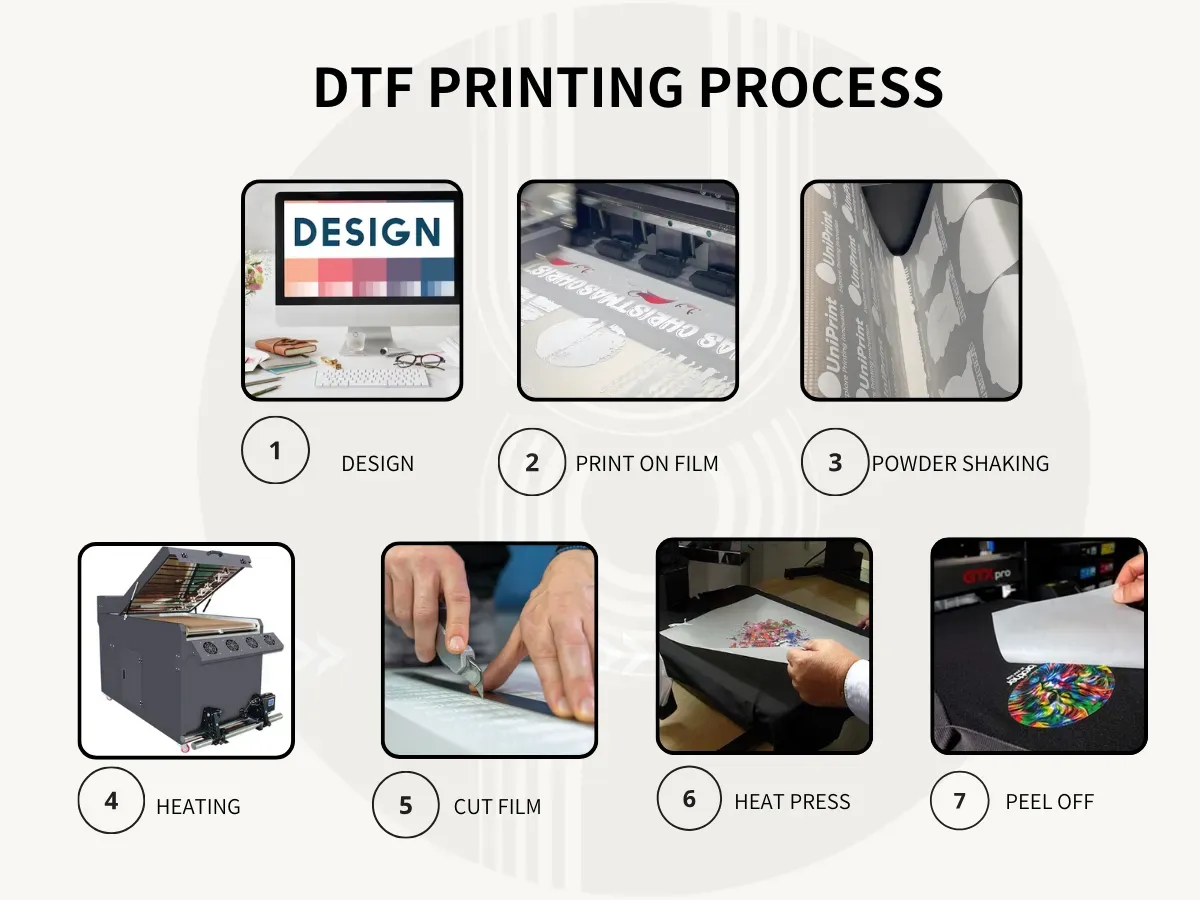
The DTF printing process starts with high-resolution artwork and careful color management. The design is printed onto a clear PET film using water-based textile inks, so the ink sits on the film rather than directly on the garment. This architecture supports bright color reproduction and white underbases, helping designs pop on dark fabrics while remaining washable.
After printing, the wet ink is dusted with an adhesive powder and cured so the powder bonds to the film. Pre-pressing the garment removes moisture and creates a smooth surface, then the film is placed on the fabric with the design facing down and pressed with heat at the recommended temperature and time. Finally, the film is peeled away as the transfer cools, leaving a durable, flexible image on the garment. Each step affects color accuracy and durability, so a consistent workflow matters.
DTF vs DTG Printing: Choosing the Right Technique for Your Garments
DTF vs DTG printing: which approach is right for your apparel project? Direct-to-Film uses a film intermediary and adhesive, while Direct-to-Garment prints ink directly onto fabric. DTF can produce sharp color on dark fabrics and handle multi-color designs with less risk of color bleeding, making it a strong option for mixed fabrics and bold imagery. DTG often requires pretreatment on dark fabrics and may deliver a softer hand depending on the garment and inks used.
Cost, run size, fabric type, and desired feel all influence the choice between DTF printing and DTG. For small runs or designs requiring robust opacity on dark shirts, DTF transfers can be more economical and easier to reproduce consistently. DTG can excel for high-detail art on lighter fabrics, but the decision depends on your target orders, production speed, and long-term maintenance considerations.
DTF Inks and Powders: Key Materials that Drive Quality
DTF inks and powders are critical to achieving color vibrancy and adhesion. Inks are chosen for suitability with water-based textile formulations, while powders vary in tack and curing characteristics. The interaction between ink, powder, and the PET film determines opacity, edge sharpness, and wash durability.
Protecting the quality of DTF inks and powders means proper storage, moisture control, and careful handling. Keep powders in sealed, dry containers and shield them from humidity; store films flat and avoid clumping caused by moisture. Selecting reputable brands and maintaining clean equipment helps ensure consistent results across batches.
DTF Transfers on Different Fabrics: Color, Durability, and Care
DTF transfers are versatile across fabrics, including cotton, blends, and some polyesters. The film enables white underbases on dark fabrics and full-color reproduction on light fabrics, delivering a soft hand finish once heat pressed. This versatility makes DTF transfers attractive for small businesses testing different designs and fabric mixes.
While durability is strong, follow care guidelines to extend transfer life. Use recommended heat settings and avoid aggressive washing cycles that could affect the adhesive layer. Proper post-press handling, avoidance of harsh solvents, and drying the garments flat help maintain color accuracy and transfer integrity over time.
Setting Up a Reliable DTF Workflow: Equipment, Setup, and Quality Control
Setting up a reliable DTF workflow requires essential equipment and disciplined process control. Core components include a compatible inkjet printer, textile inks, DTF film sheets, adhesive powder, a curing device, and a heat press. A reliable RIP helps manage color profiles and layout for accurate reproduction, while the DTF film carries the ink from the printer to the garment and the powder bonds the design during heat.
Quality control begins with test batches, keeping spare film and powders, and recording temperature, time, and pressure for each design. Maintain a dust-free workspace, clean print heads, and consistent room temperature and humidity to reduce variability. As you scale, a Direct-to-Film for apparel workflow benefits from meticulous documentation and repeatable procedures, ensuring every transfer meets your standards.
Frequently Asked Questions
What is DTF Printing and how does Direct-to-Film for apparel work?
DTF Printing (Direct-to-Film) prints designs onto a clear PET film using textile inks, applies an adhesive powder, cures it, and transfers the design to fabric with heat. The film acts as an intermediary, enabling vibrant color, white underbases on dark fabrics, and broad fabric compatibility in Direct-to-Film for apparel.
How does the DTF printing process compare to DTG printing?
DTF printing process uses a film intermediary and adhesive powder, which allows sharp color on dark fabrics and often reduces pretreatment needs. DTG prints directly onto fabric and usually requires pretreatment on dark garments. Choosing DTF vs DTG depends on run size, fabric type, budget, and the desired garment feel.
What are DTF transfers and which fabrics are best suited for Direct-to-Film for apparel?
DTF transfers are ready-to-apply designs created on DTF film that are bonded to fabric with heat. They work well on cotton, blends, and many polyesters, delivering full-color images, durable adhesion, and a soft hand on a wide range of apparel.
What are common issues with DTF inks and powders, and how can I troubleshoot in the DTF printing process?
Common issues include faint colors, powder clumping, poor adhesion, or ghosting. Troubleshoot by checking DTF inks and powders levels, ensuring proper curing, maintaining a dust-free work area, and validating temperature, time, and pressure settings in the DTF printing process.
What are the benefits of DTF Printing for small runs and beginners?
DTF Printing is well suited for small runs due to a simpler workflow, minimal setup, and repeatable results. Using DTF inks and powders, you can produce vibrant transfers on multiple fabrics with lower upfront costs than many traditional methods, making it ideal for beginners.
What best practices optimize the DTF printing process for reliable results?
Adopt a calibrated color workflow, use reliable RIP software, pre-press garments, store materials properly, and maintain your film and powders. Record successful settings for each design to improve repeatability and ensure consistent results in the DTF printing process.
| Topic | Key Points |
|---|---|
| What is DTF Printing? | Direct-to-film method prints designs onto a PET film using textile inks; applies adhesive powder; the powder is cured; design is transferred to fabric with heat; the film acts as intermediary; ink sits on the film; enables bright color reproduction, white underbases, and fabric versatility. |
| The DTF printing process | Artwork prep; print on DTF film with water-based textile inks; dust with adhesive powder and cure; pre-press the garment; place the film on the garment (design facing down); heat press at recommended temp/time; peel the film and cool; each step affects color accuracy and durability. |
| Direct-to-Film for apparel | DTF transfers work on cotton, blends, and some polyesters; supports full-color images and white underbases; advantages include high color vibrancy, durability, easy handling for small runs, and forgiving workflow; drawbacks include consumable costs, maintenance, and a learning curve. |
| DTF vs DTG | DTF uses a film intermediary and adhesive; DTF can yield sharper color on dark fabrics and handle multi-color designs with less color bleeding; DTG often requires pretreatment on dark fabrics; DTF can print white ink on film for better legibility on dark shirts; costs and maintenance vary; choice depends on run size, fabric, budget, and desired feel. |
| Equipment and materials | Printer, textile inks, DTF film sheets, adhesive powder, curing device, heat press; RIP software for color management; dust-free work area; powder shaker; lint-free gloves; teflon sheets; quality control; test small batches; keep spare film and powders; maintain consistent temperature and humidity. |
| Design and color considerations | Calibrate monitor; test prints on inexpensive garments; use 300 dpi at intended print size; export PNGs with transparency; wide color gamut; plan underbase for white ink on dark fabrics; edge smoothing; avoid overly large blocks of solid color in small areas; results offer vibrant color and robust opacity. |
| Tips for beginners and best practices | Begin with simple designs; practice on inexpensive samples; pre-press garments; keep adhesive powder dry; store powders properly; align transfer carefully and verify position; record temperature, time, and pressure for each design; workflow grows with experience. |
| Troubleshooting and common issues | Faint colors: check ink levels, curing, and RIP settings; ghosting or misalignment: film movement or garment shift; recheck alignment and tape film edges; white areas not opaque enough: review underbase settings; transfer not adhering: verify temperature, time, pressure, and film cleanliness; regular maintenance reduces issues. |
| Maintenance and care | Keep print heads clean and environment dust-free; inspect ink, film, and powder supply; store films flat; powders in dry, cool spaces; document settings that work; reduces downtime and improves repeatability. |
| Applications and next steps | DTF Printing supports tees, hoodies, tote bags, and more; expand to larger runs; explore more complex designs and fabrics; run test orders on target fabrics to compare; practice, keep records, and gradually refine parameters. |
| Conclusion (summary) | DTF Printing provides a practical, flexible route into apparel decoration. With careful design, proper materials, and a disciplined workflow, beginners can create vibrant, durable transfers that look great on many fabrics. The approach blends art, craft, and technology, turning ideas into wearable products. As you pursue Direct-to-Film for apparel, stay curious, test often, and gradually expand your toolkit. Your DTF Printing journey has just begun. |
Summary
DTF Printing provides a practical, flexible route into apparel decoration. With careful design, proper materials, and a disciplined workflow, beginners can create vibrant, durable transfers that look great on many fabrics. The approach blends art, craft, and technology, enabling you to turn ideas into wearable products. As you pursue Direct-to-Film for apparel, stay curious, test often, and gradually expand your toolkit. Your DTF Printing journey has just begun.